Monday, November 7, 2022

The Public Enemy (1931): Did They have to Rub Out the Horse?

This is my entry in the Classic Movie Blog Association's Movies are Murder Blogathon. Click here for more movie murder and mayhem.

The Public Enemy: 

The Killer Must Be Killed
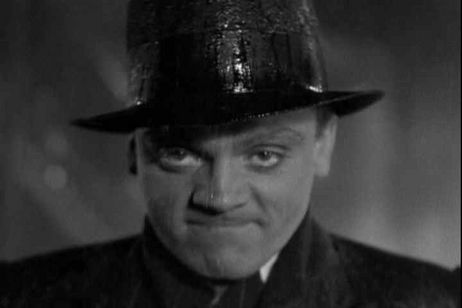
This

As most likely know, there are murders aplenty in The Public Enemy (1931). There are those anonymous gang members caught in the spray of a tommy gun and there are those of the specific nature - retribution for disloyalty or double crossing ratness. And then there are those of the innocent. The innocent deaths are the ones that hurt the most.
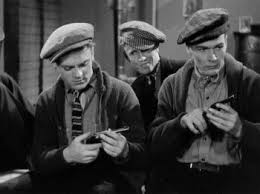
Tom and Matt handle a gun for the first time

I don't mind saying that the first time I saw "The Public Enemy," it scared the bejesus out of me. From the eerily disconcerting "I'm forever blowing bubbles" played on a gramophone to that final murder, it still gives me the chills to this day. That dull thud of a lifeless body before the fade out is right up there with all of those movies that deliberately try to scare you (thinking "The Exorcist" and "The Omen" and the like).
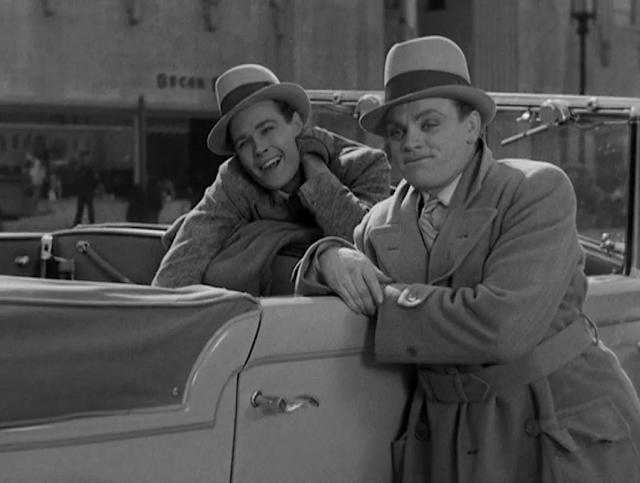
Oozing murderous charm

And yet there is also something compelling about this film that makes it so complicated, something that jazzes the whole nasty story up, and that disconcerting something is James Cagney as Tom Powers. Cagney was originally and famously cast as second banana Matt, but director William Wellman demoted Edward Woods, the original Tom, to the role of Matt and re-cast Cagney as Tom. It proved to be a brilliant move. His on the make charm, that jaunty little spin he takes when he see he has a chance with Jean Harlow's Gwen, his self confident strut when he shows up in his new clothes, all make for an unsettling confusion. If this guy is so bad, why can't I dislike him? 

As Tom and boyhood buddy Matt Doyle drift from a brutal and impoverished childhood into a life of petty crime (they never rise above being trusted lieutenants to boss Paddy Ryan), the first murder they witness is that of their boyhood friend, Larry Dalton. Tom and Matt and Larry, all barely men, are enlisted by gangster Putty Nose to rob a fur warehouse. Things go wrong and Larry is shot and killed by a cop, who Tom shoots before escaping with Matt. Frightened, they go to Putty Nose for help (he has promised to protect them), but they are turned away and forced to fend for themselves. As the neighborhood mothers weep over the loss of a young man who went wrong, Tom and Matt get their first glimpse of a dead body at Larry's funeral. But it won't be their last.
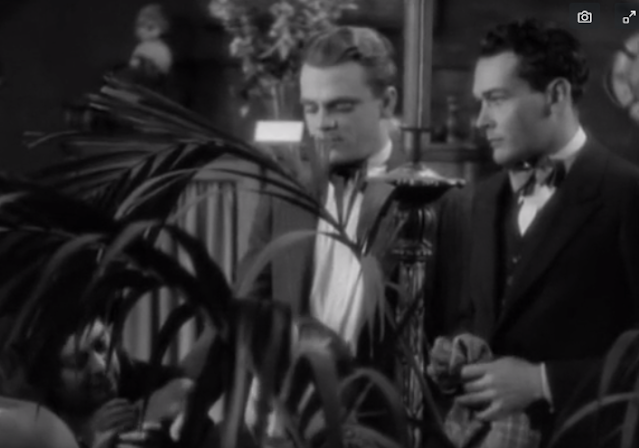
After you see your first friend in a coffin, it gets easier

As Prohibition becomes the law of the land, Chicago crime boss Paddy Ryan recruits Tom and Matt as his "beer salesmen." Strong-arming saloon keepers for their bootleg beer, Tommy and Matt muscle their way through their life of crime. 
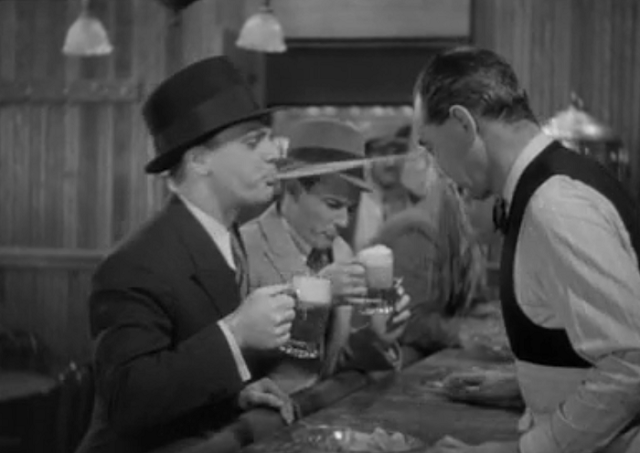
Tom makes clear his distaste for a rival supplier's product 

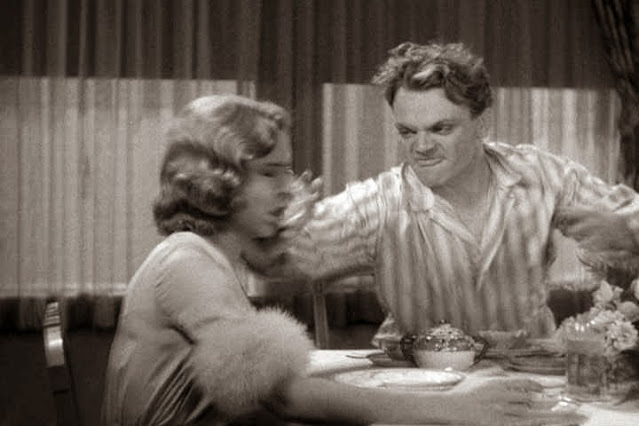
For a while, they are riding high. New clothes and new women make life even sweeter. Tom is a charming brute. He picks up the unfortunate Kitty, but eventually tires of her, giving her the famous "citrus massage" in her puss. 
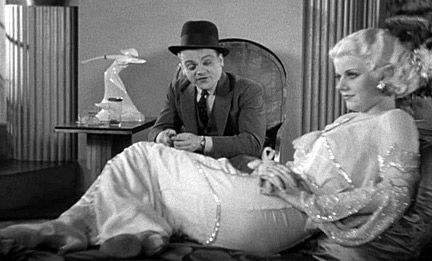
Harlow as Gwen: her acting is green, but her allure is platinum

Mae Clarke as Kitty receives the cinema's most famous facial

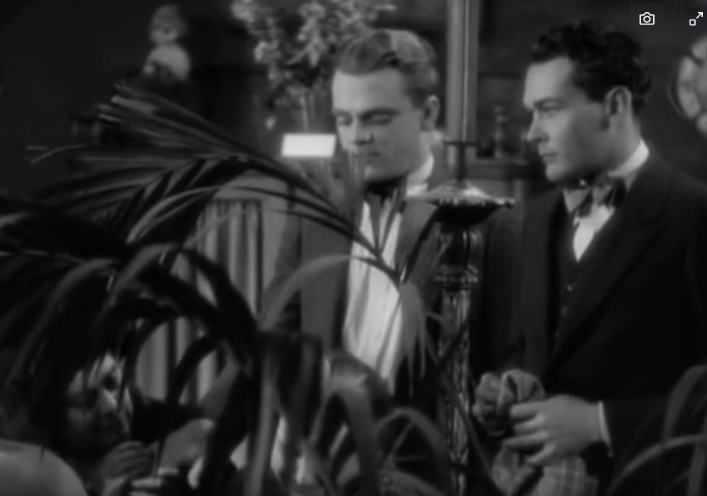
He moves up to the more glamorous tart Gwen. Jean Harlow, in an early performance, is pretty terrible. But, as bad as she is, there is an undeniable allure about her and she sure wiggles her caboose in an unforgettable manner. Tom is also is taken under the wing of fancy gangster, Nails Nathan. Nathan is a sort of mentor to Tom, a "class" guy that Tom look up to aspires to emulate.

And then there is Putty Nose. Ah Putty Nose, the dirty double crossing rat who left Tom and Matt holding the bag after the bungled fur warehouse job. Tom does not forget and poor old Putty Nose - well, he had it coming. Can't say I felt bad. He was the groomer who lured Matt and Tom into a life of crime. After doing away with the craven Putty Nose who begs for his life, Tom coolly turns towards the door and wonders if he can still get together with Gwen. A psychopath does have his needs.
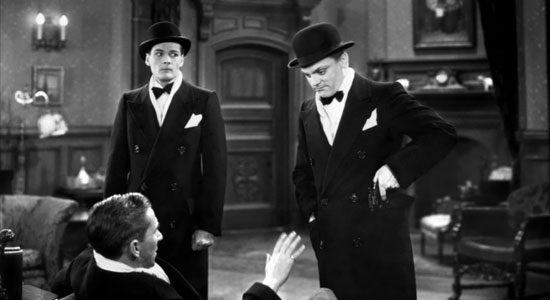
Say your prayers, Putty Nose

So, the thing about Tom that softens me to him, beside his obvious charm, is his admittedly twisted code of honor. In a world where people are double-crossing and selling out one another so fast it makes your head spin, Tom's loyalty to his friends is kind of admirable. I told you this was complicated.
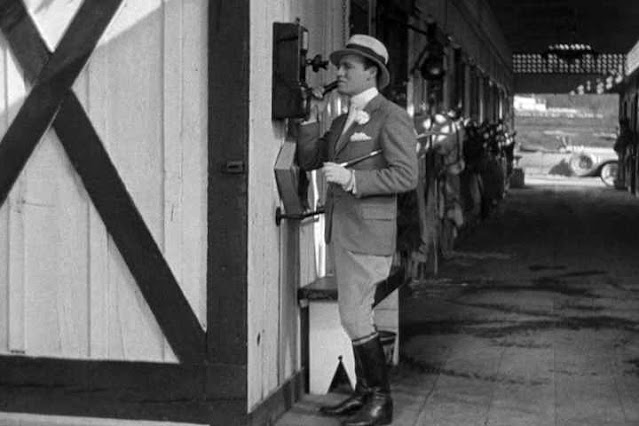
Nails Nathan before his fateful ride

Matt's murder in a shoot out with the rival Schemer Burns gang (live by the gun, die by the gun, I suppose), sends Tom on a vengeful mission. He is outgunned, but somehow manages to survive. Well, that wasn't his enemies' plan and, wrapped like a junior king tut, his lifeless body is delivered to his annoying mom and goody two-shoes brother, the final murder in a murderous tale.
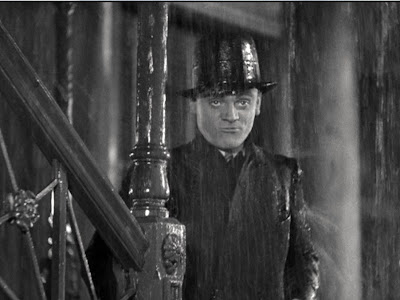
Vengeance is Tom's

Tom Powers is no better or worse than so many of his contemporaries, but there is one other murder in "The Public Enemy" that I can't accept as remotely justified. Unlucky for Tom, just when he is finally making some headway with the hard to get Gwen, Matt appears and tells him the bad news: Nails Nathan has been killed. And not killed by a rival gang, but by his horse. Dandy-wannabe Nails, decked out in his best English riding habit, was thrown by his mount and died as a result of a hoof to the head. Tom, true to his code, has to kill the killer of the man he so admired and, with a single shot, committs equinecide (I know, not a word, but it could be). Honestly, if the guy was a better rider he probably would not have been thrown*. Mercifully, the murder takes place off screen. There is a shot and a sad neigh.
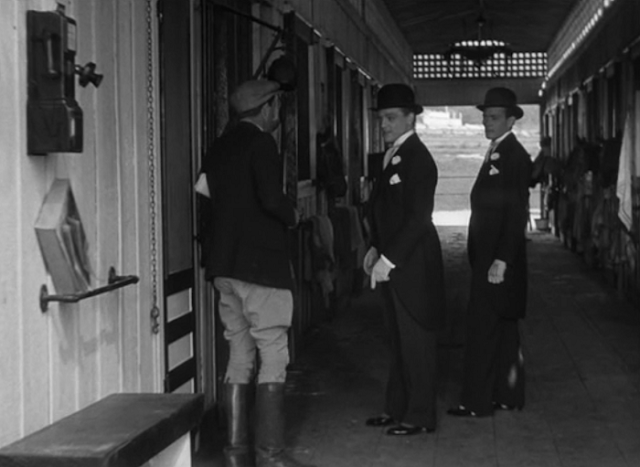
Where's that horse?

And so, I find myself sadder and madder over the murder of an unknown and unseen horse than over the murders of Larry, a cop, Putty Nose, Matt and, ultimately Tom. In a way (other than the cop, who faced potential harm in 1920s Chicago), they all had it coming. But not the horse. If you're the person who cries harder when the dog dies in the film than when the human does, you know what I'm talking about. And when Tom Powers takes that final flop at the feet of his mother and brother, I am pretty sure, to paraphrase Zuzu in "It's a Wonderful Life," every time a horse-murdering gangster buys the farm there is a happy neigh in heaven.
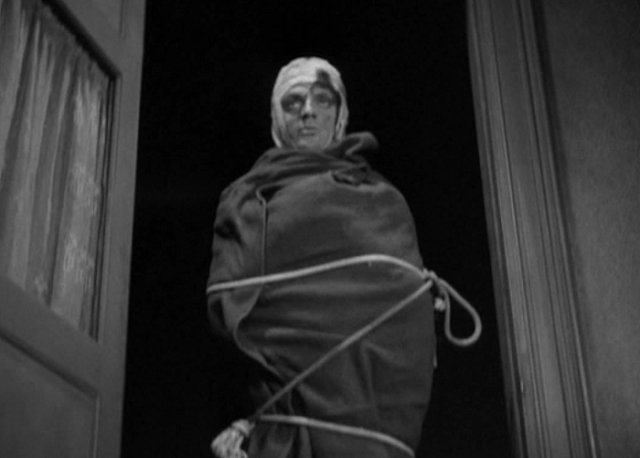
Special delivery

* The murder of the horse is actually based on a true story (as is much of this film). True life gangster Samuel "Nails" Morton was a flashy mobster who took a liking to riding his mount in Chicago's Lincoln Park. When his horse (obviously one on the side of law and order) threw Morton and then fatally kicked him in the head, Morton's compatriot Louis "Two-Gun" Alterie, took the horse out for a ride, shot him and left him for dead. 


Thursday, October 20, 2022

The Take Two Blogathon - Strawberry Blonde is Better the Second Time Around

This is my entry in the Take Two Blogathon hosted by Hometowns to Hollywood. Click HERE for more remarkable remakes.


Some films just don't get it quite right the first time around. Remake "Gone With the Wind"? Unthinkable. Remake "A Star is Born"? Maybe the perfect version is yet to be made. 

Biffs and Amys

"Strawberry Blonde" (1941) first saw cinematic life as "One Sunday Afternoon" in 1933. Based on a stage play of the same name, "One Sunday Afternoon" boasted an intriguing cast headed by Gary Cooper and Fay Wray. The story of dentist Biff Grimes (Cooper) who carries a torch for Virginia Brush, the local beauty (Wray) who marries his rival (Neil Hamilton) has some small town charm. However, there is a certain darkness about this film despite some comedy and the bucolic setting that is a little off-putting. Cooper's performance as Biff Grimes lacks the actor's usual charm. To be honest, he comes off just downright nasty and disagreeable. The beauty and her conniving husband (who causes Cooper's character to go to jail) are also a nasty pair without too many redeeming characteristics. Only Biff's wife Amy, as played by Frances Fuller, is likeable, but she is so sweet and nice in the face of Biff's indifference that I found myself wondering what she saw in the lout and wanting her to leave him a goodbye Charlie note. 

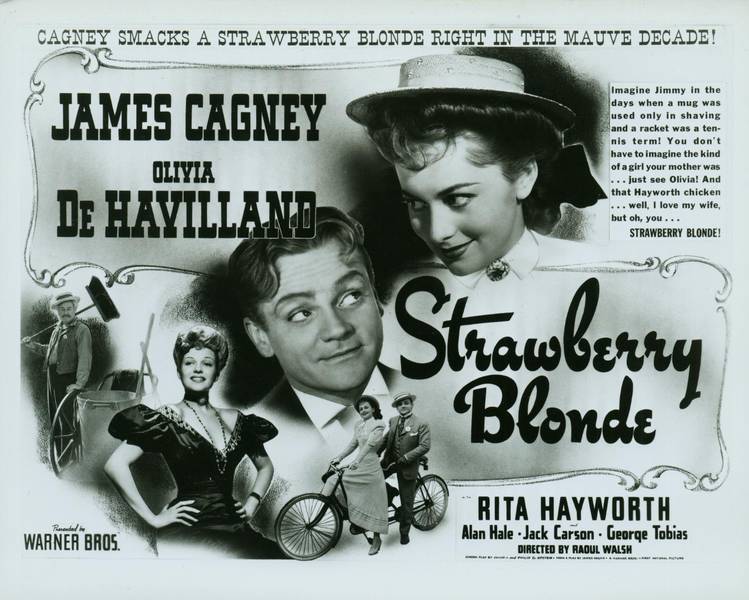
For some reason, Warner Brothers thought they could remake this story, but it needed a few tweaks. First, writers Julius and Philip Epstein took the story out of the country and put in in New York City at the turn of the 20th century. The title change to "Strawberry Blonde" not only referred to the beauty of the story, but to the song that has such meaning to Biff Grimes. Once the story was moved to New York, who better to play the combative and cocky dentist but James Cagney? While he had some misgivings about being cast in the film, once Raoul Walsh signed on as director, Cagney was in. Add Olivia de Havilland, Rita Hayworth and Jack Carson to the cast and things were really starting to shape up.


Virginia, Amy, Biff and Hugo meet for their first date

The difference between the 2 films is literally night and day. While the earlier version is dark, "Strawberry Blonde" is light and endearing. Gay nineties music is always in evidence and the very cardboard characters of the first film come to life in a most endearing way. 

Biff sports his ever present shiner

The icing on the cake is the perfect casting. Where Cooper's Biff was moody and resentful, Cagney's Biff has a little boy charm that makes all his antics forgivable. He sports a perpetual back eye from all of his scrapes and when trying to explain himself simply offers "that's the kind of hairpin I am." Aww.

It took Biff the entire film to comment on Amy's beauty.
Maybe those shiners affected his eyesight?

Olivia de Havilland's Amy darn near steals the film. Unlike Frances Fuller's too sweet Amy, de Havilland is a spitfire who winks, loves her man and looks impossibly beautiful while doing it. In fact, I think she wins the beauty contest over her pal, the strawberry blonde of the title, hands down. And since that strawberry blonde is Rita Hayworth, that is saying something.

Speaking of Rita Hayworth, the part of Virginia Brush was originally envisioned for Ann Sheridan, an actress who had demonstrated some chemistry with Cagney in earlier films. Sheridan, however, like a good Warner Brothers rebel, went on strike and the part went to Hayworth. While Wray is very pretty, her Virginia is a rather bland character who goes from small town beauty to tramp. Probably due to the enforcement of the production code, Hayworth's Virginia devolves into a shrew instead of a tramp, but nonetheless she sparkles with allure and good humor. Who could blame all the boys having a crush on her?


The Barnsteads

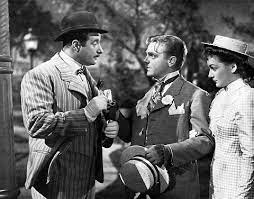
The villain of the piece is Hugo Barnstead, the thorn in Biff's side. As played by Neil Hamilton in the first film, Hugo is an insufferable blowhard. He's still an insufferable blowhard in the second film, but, really, can you ever dislike Jack Carson? We know he's a creep, but he's such a funny and pompous creep. Cagney was a little unhappy at being paired with an actor who surpassed 6 feet in height, but the physical difference between the two men only emphasizes their differences in social standing and ultimate cuteness.

Biff looks up to Hugo, but it's only because he's taller


But it is the love story between Biff and Amy in "Strawberry Blonde" that elevates the film far above the original. Cagney and de Havilland blend so well both physically and in temperament. For once he gets a leading lady who can hold the screen with him and not disappear in the face of his personality. 

It's all about the love story

There are three lovely scenes between Biff and Amy, all taking place in a park, that show their developing love story.

Biff would much rather be with Virginia

First, when they are set up on a blind date, Biff clearly wants to be paired with Virginia, but Hugo, of course, outmaneuvers him. This leaves Biff "stuck" with nurse Amy. He is disagreeable and annoyed. Her talk about bloomer girls, smoking and perhaps unmarried sex shocks Biff. She is way too fast for him, with the soft and feminine Virginia representing his ideal woman. Cagney and de Havilland play perfectly off one another. You can see she is a gal who can give as good as she gets and that she is the better girl for him. But, being a guy, he's blind to the obvious.

Amy saves Biff some humiliation when he
finds out Virginia and Hugo have eloped

The next park scene has Amy coming to tell Biff that Virginia would not be keeping her date with him because she eloped with Hugo. After some huffing and puffing, and Biff's advances exposing Amy as being all talk about the pre-marital sex stuff, Biff finally sees that Amy is a more quality person than Virginia. Here they agree to go steady and eventually marry.

At last Amy is appreciated

The last park scene is one of the most beautifully acted scenes of any film I've ever seen. It's not big, it's not over the top, but it is quiet, tender, real and moving. Upon returning home from prison (where Hugo's double crossing landed him), Biff meets Amy in the park where much of their love story unfolded. Biff is humble and grateful that Amy has stood by him and Amy is overcome with love as she reaches for her man. Their ultimate embrace has you cheering for them. Who cares about Hugo and Virginia?


Biff's final act of revenge when Hugo presents himself with a tooth ache highlights the essential difference between the two films. In the earlier version, Biff gives  Hugo almost enough gas to kill him before Biff comes to his senses. In the remake, Biff contemplates gas, but elects to pull the tooth without the pain killer, causing Hugo a great deal of pain and giving Virginia a good laugh. It's a great scene and I can't forget how Hayworth stubs out her cigarette in Biff's spit sink. Some lady.

Hugo and Virginia. Turns out, they deserve one another

Of course, there is a happy ending for "Strawberry Blonde." Amy, adorable as always, whispers in Biff's ear, presumably that she is expecting, and the two take their Sunday walk together in smiles as wide as the screen.

Exactly!

The happy couple


Alan Hale as Biff's dad with the troubled teeth

"Strawberry Blonde" has even more added attractions: Alan Hale as Biff's ne'er do well father is a hoot, as is the one and only Una O'Connor as a lady he flirtatiously chats up. And then there is the ever reliable George Tobias as Biff's pal, a marked improvement from Roscoe Karns in the earlier film.

Mrs. Mulcahey has Mr. Grimes' number

"Strawberry Blonde" ends with a gay nineties sing-along for the audience to seal that old time nostalgic flavor. 

When asked once what if he had a favorite film, Walsh said it would have to be "Strawberry Blonde." It also counts as one of Cagney's favorites. The love and affection and just plain old good humor pours off the screen.  Walsh liked the story so much he directed a third, musical version of the story in 1948 starring Dennis Morgan and Janis Paige. However, the less said about that version the better. No, the second time, in this instance was the charm.


Friday, July 8, 2022

The Lina Lamont Fan Club: Still She Persisted!

                        Greetings from the Lina Lamont Fan Club!


This is my entry in The Classic Movie Muse's Singin' in the Rain Blogathon. Click here for more of that glorious feeling.

Yes, loyal fans, we are still here. No matter how hard her enemies try to destroy her legacy, Lina Lamont's fans will not rest until the truth is known and Lina is awarded her proper place in the history of film.

He could too talk!
Just as John Gilbert's legacy was harmed by those who sought to destroy him, Lina's reputation has suffered. For those not familiar with Mr. Gilbert, he was a huge star whose career was destroyed when his enemies made his perfectly adequate voice seem inadequate when talkies changed movies forever. Once the great lover of Greta Garbo, Gilbert made powerful enemies and - poof! -  bad sound, bad scripts, good-bye. Garbo, on the other hand, had scripts tailor-made to her vocal abilities and the best directors, sets, co-stars and costumes. Funny how that happened.

Lina's story is not unlike that of John Gilbert. From 1923 - 1929, Lina Lamont was Monumental Pictures biggest and brightest star. Women copied her and men longer for her. She especially excelled in historical romances and, once paired with Don Lockwood, was one half of a screen duo that rivaled the aforementioned Garbo and Gilbert. During the height of her popularity, Lina received more fan mail than Swanson and graced the covers of more magazines than Bow and Brooks - put together!
Garbo and Gilbert could not compare to Lockwood and Lamont
Naturally, Lina was Monumental's highest paid star. When talking pictures took over, the "masterminds" (as Norma Desmond called them) saw a way to force Lina to take a giant cut in pay. They did virtually nothing to prepare her for talking pictures, giving her only a few lessons with a half-baked vocal coach. MGM not only gave Garbo time to get up to sound speed, but also waited until they found just the right screenplay for her talkie debut ("Anna Christie"). Poor Lina was forced to transition at the snap of a finger from the silent "The Dueling Cavalier" to "The Dancing Cavalier," which showcased the much lower-paid Lockwood's strengths and set the stage for Kathy Selden, the chippie who was sleeping with the star, to claw her way to the top on Lina's back.
Lina had a perfectly lovely speaking voice that
 was manipulated by Monumental Pictures
Lina was also falsely accused of being a "dumb blonde." Lina was a high school graduate with straight "B"s. Her business savvy was legendary. In fact, Mary Pickford was known to admire Lina's negotiating tactics.  But besides being Monumental's highest paid and most glamorous star, Lina also had a keen, inventive mind. Not many people know this, but Lina Lamont was the real inventor of the internet. 
Lina loved to keep current with the likes of gossip columnist Dora Bailey
Others stole the credit, but those who know Lina's keen interest in electronics and gossip know that she was in the forefront of merging technology with up to the minute information. Even today, the 512 x 512 pixel standard test image is known as a "Lena." Coincidence? We think not.

Fans of fashion know Lina as one of the best dressed stars in Hollywood. Whether it be in a period romance, as in this sumptuous costume from "The Royal Rascal,"


or this chic and modern monkey-fur trimmed jacked, Lina knew how to accessorize and always looked better than any star in the room.
So, here's to you, Lina Lamont. Your fans still love you and will never rest until you have been recognized as the ultimate shimmering, glowing star in the cinema firmament.
Lina and whats-his-name
They have rediscovered Louise Brooks. Now it's time for a Lina Lamont revival!

Sunday, June 26, 2022

Joan Crawford: Channeling the Spirit of Norma Desmond

This is my entry in the MGM Blogathon hosted by Silver Scenes. Click here for more great posts about the Hollywood Golden Age's most golden studio.

Joan


First, let me state unequivocally that I am 100% on Team Joan. There will be no hating, no snarkiness and certainly no wire hangers found here. Second, in my eyes, Norma Desmond was a woman who spoke the truth (but wrapped, I admit, in a slightly  - shall we say unusual - package). And yes, I know Norma worked at Paramount, but stay with me on this.

Joan before the MGM star transformation. Looking a bit like Bonnie Parker.
Clearly some work needed to be done.


The 1920s saw a hunger and desire for anyone to achieve the American Dream. Dusting off an uncomfortable past and inventing a new, shiny, more desirable one  seemed possible. Just ask Jay Gatsby.


When you're a starlet you have to pose for
all kinds of silly publicity pictures
.

Joan Crawford's story has a Gatsby-esque quality. Born Lucille LeSueur into a poor and broken Texas family, she  worked her way up from dancing in a traveling show, to Broadway chorus girl (using the name Billie Cassin) to MGM starlet with a determination that more than matched her beauty or talent. And it was at MGM that Lucille was given a chance to reinvent herself, obliterate her past and live the American Dream.

"Our Dancing Daughters" showcased Joan as the perfect flapper.


Something about the $75 a week starlet told the MGM publicity machine that Lucille had potential. Her look was being transformed (alleged massive dental work among other things) and she learned how to walk, talk and act through lessons in all manner of self-presentation. But that name! The studio didn't like it (sounded like sewer) and decided to let the public rename her. In a bold stunt, Movie Weekly magazine selected the name of Joan Crawford. From then on, the studio/public created person by the name of Joan Crawford moved front and center and Lucille LeSueur was buried in the past.

"Grand Hotel" proved she could hold her own with the best of them.


Slogging her way through silents and embodying the image of a flapper (F. Scott Fitzgerald called her "the best example of the flapper") and really coming into her own with sound, Joan Crawford became MGM's biggest money maker. It was said that it was Norma Shearer who got the big productions (she was, after all, as Crawford wryly noted, sleeping with the boss), Garbo who supplied the art, and Joan Crawford who made the money to pay for both. Like all great stars, it was the public who made her one. Her 1930s glamorous shop girl films sold like wild fire. And then suddenly they didn't. By 1938, she, along with Katherine Hepburn, Marlene Dietrich, and Greta Garbo, was labeled "box office poison" by the Independent Theatre Owners Association of America. 

With frequent co-star and occasional
lover Clark Gable in "Strange Cargo."


But Joan was nothing if not resilient. Starting with 1939's "The Women" and followed by "Strange Cargo," she proved she was not quite out of the game. However, after 18 years, she and MGM, the place she professionally grew up in, parted company in 1943. Was she bitter? She says "no", although that feeling might have been realized in hindsight. Studio head Louis B. Mayer is not always considered to be a beloved figure, but according to Joan in a 1965 interview with John Kobal, "To me L.B. Mayer was my father: my father confessor; the best friend I ever had." While Joan went on to some victories (notably her Oscar for "Mildred Pierce" at Warner Brothers), she also suffered the indignities of an aging woman in a world that worships female youth.

We should listen to Norma


So here's the Norma Desmond connection. She might as well have been speaking of Joan when she said "I am big. It's the pictures that got small." Like Joan, she embraced the life and persona of a movie star and was always grateful for all of those wonderful people out there in the dark. But, as George Carlin said, "the reason they call it the American Dream is because you have to be asleep to believe it." The demons that clipped at the heels of Lucille LeSueur, no matter how fast she ran, never really went away. While the public's tastes and movies changed, Joan Crawford could not. Reality always rears its ugly head, even in Hollywood. Added to personal drama, Joan committed the unforgiveable sins of aging and remaining big while everything around her got small.

Joan in the Adrian designed "Letty Lynton"
dress that took American by storm


While many stars rebelled against the studio system, Joan Crawford embraced it. She never appeared in public unkempt and never less than every inch a star. She always, always gave us glamour and famously said "if you want to see the girl next door, go next door." She loved her public and her job. "I have nothing but gratitude for this fine, great industry that I love and worship. It has given me everything that I have in life."

This is what a movie star looks like


Joan Crawford Movie Star, your public really appreciates that.