Showing posts with label CMBA Blogathon. Show all posts

Sunday, November 10, 2024

The Time of Their Lives: Bud and Lou Every Night at My House

This is my entry in the Classic Movie Blog Association's A Haunting Blogathon: In the Afterlife. For more eerily delicious articles, please visit here.

Bud and Lou on opposite sides of the revolution in 1946's "The Time of Their Lives."

My Father: How many times can you watch the same film?

9 year old me: a lot.

If you grew up in the New York metropolitan area in the 1960s - 1980s, you probably remember Million Dollar Movie. Twice nightly for an entire week channel 9 would run the same movie. The opening theme was especially memorable. Upon seeing "Gone With the Wind" for the first time in its theatrical release in 1967, my friends and I (and probably a bunch of others in the theatre) exclaimed "that's the theme from Million Dollar Movie!" when we first heard Tara's Theme.


The same movie every night! What joy during an era when there were no VCRs, no DVDs, No DVRs and no cable or streaming TV! I wonder how many little movie lovers followed that siren song that opened the door to classic movie mania (and I write that without an ounce of shame). My brothers happily watched "Mighty Joe Young" every night, but my favorite, by far was Abbott and Costello's "The Time of Their Lives."

Bud and Lou were already well known in my house via reruns of their television show (an afternoon ritual). Seeing them in a story, and such a funny and rather scary story, only made me love them more.

Ghosts Lou Costello and Marjorie Reynolds realize they are ghosts condemned as traitors

"The Time of Their Lives" is an un unusual Abbot and Costello film because Bud and Lou are not a team here. In fact, Bud is the target of Lou's antics. Briefly, Lou plays a Revolutionary War era tinker named Horatio Prim. Horatio was a patriot who wanted to earn enough money to buy his servant girl sweetheart out of her indentured servitude. In the meantime, a plot with Benedict Arnold was afoot. In a case of mistaken identity (what else?) he and patriot lady Melody Allen (Marjorie Reynolds) are taken for traitors, shot, their bodies thrown to the bottom of the well and bound by a spell that condemns them on the Danbury property unless they are proven not to be traitors. Of course, the real traitors were butler Cuthbert (Abbott) and Melody's fiancé, Tom Danbury. A letter from General Washington could clear the doomed duo and one did exist, but it was hidden by the duplicitous Tom. 

Fast forward to modern times and the old Danbury estate has new tenants. Horatio and Melody have been rambling around the property for centuries, but this new crew moving in consists of a Cuthbert look-alike (Abbott again as Cuthbert relation Dr. Greenway) and a few other non-believers. The ghosts are able to communicate their plight via psychic housekeeper Emily (Gale Sondergaard), Washington's letter is found thanks to a message sent by the repentant Tom, the cursed duo are united in Heaven with their loved ones and Cuthbert/Greenway finally gets punished.

What charmed me as a kid were the special effects. The ghosts have some fun with cars and radios and the fact that they can walk through walls. When Melody spots the beautiful fashions of the day and dresses up in a modern evening gown and jewels, only the clothing and jewelry are visible to mortal eyes, setting the stage for only a pair of stockings running up the stairs past a terrified Binnie Barnes.


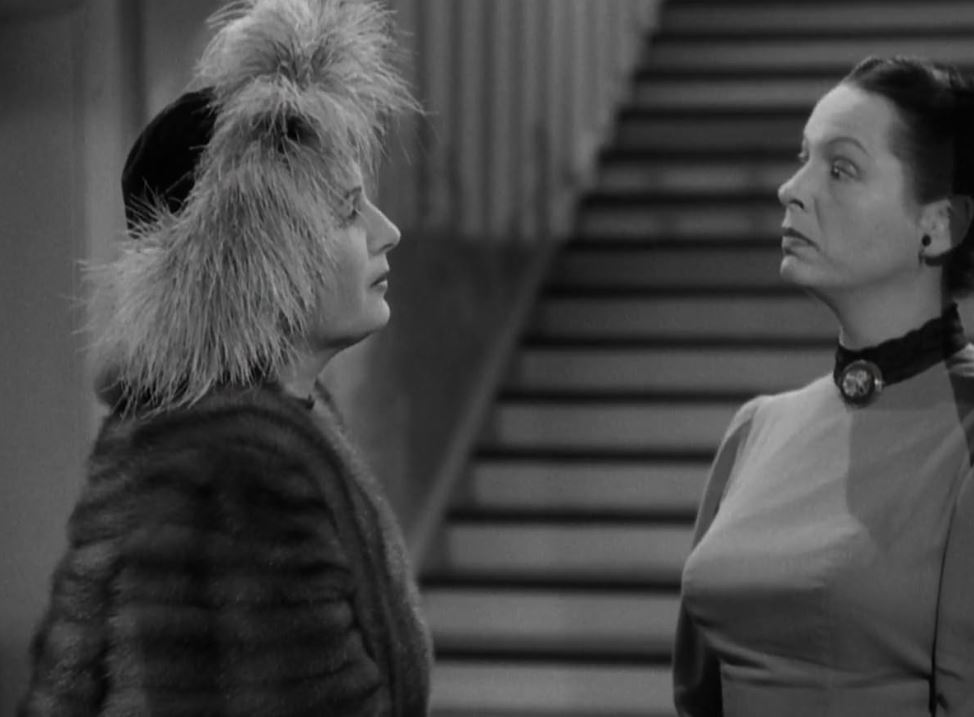
A special shout out to Gale Sondergaard as Emily. She is Judith Anderson's equal when it comes to creepy housekeepers (making Binnie Barnes's line "didn't I see you in Rebecca?" even more amusing) and I can still hear her spooky way of calling to Melody as the long-dead Tom Danbury during a séance (Mel-o-deee.....Mel-o-deee). 

"Didn't I see you in Rebecca?"


Those ghosts are real!
I apologize for taking so long to get to the main topic here, but truly, the main topic is that every night viewing that prompted a question from my father that I have not yet been able to provide a quantitative answer. 

Sunday, May 19, 2024

One, Two, Three - Seasoned Cagney Can Still Spice It Up

This is my entry in the Classic Movie Blog Association Screen Debuts and Last Hurrahs Blogathon. Click here for more memorable firsts and lasts.

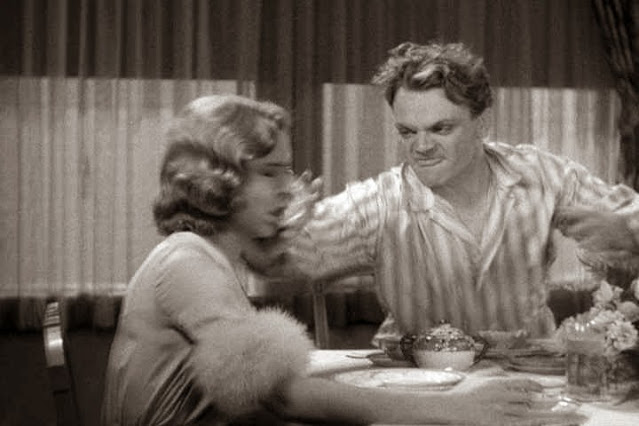
Cagney and the grapefruit make one last joint appearance

Season is an interesting word. It can mean to add flavor to something, or it can define a period of time. In the case of James Cagney, from day one he always seasoned the screen with some invigorating cinematic spice. He was also a performer who, in over 30 years, presented himself to the audience in various seasons of his acting life. From the summer of "The Public Enemy" to the winter of "Ragtime," Cagney not only physically matured, but also matured in the depth and humanity he brought to his roles. All before our eyes. While those two winter roles - the aforementioned "Ragtime" and the final performance in the television movie "Terrible Joe Moran," gave us a final glimpse of a cherished star, it is the late autumn performance in Billy Wilder's "One, Two, Three" (1961) that offers us the final major performance of a great star. At age 62 he was as dynamic as he was 30 years earlier.

Not as well known as many of Wilder's other great films, "One, Two, Three" is a sharp, sly and very funny look at the cold war and corporate moral flexibility (to put it kindly). A lot of the topical humor may be lost on those who didn't live through the cold war or are not familiar with it. Originally slated to be filmed in Berlin, the crew had to quickly relocate to Munich because those pesky Russians decided to build a wall. The dialogue is filled with topical references (do modern audiences know who Khrushchev was, or the significance of the shoe banging on the table?). Fortunately, I am old enough to remember (wow - that's the first time I ever had occasion to use that phrase!).

Proving the cold war could be fun

Thanks to Wilder's script (co-written with I.A.L. Diamond) and direction, this all results in fast and furious fun. The supporting cast of Horst Buchholz, Arlene Francis, Pamela Tiffin, Lilo Pulver, and especially Hanns Lothar as Schlemmer, is top-notch. Cagney proves to be a good sport, allowing  several jokes at the expense of his long career - the grapefruit, the gangster quote from "Little Caesar" (even though that was uttered by Edward G. Robinson, it still harkened back to those good old gangster days), and a Cagney impression by Red Buttons. While those references made gentle fun of Cagney's decades-long public reputation, in true double-edged-sword Wilder fashion, it also seems an homage to many well-loved movie memories; an acknowledgement that we are in the presence of a living cinematic legend. I was getting those Norma Desmond/Gloria Swanson conflicted vibes here, though not in such a tragic framework.

An executive's work is never done

The film is very early 1960s, and I admit it's a bit arresting to see this particular star as a man of the modern world. For some reason he always seemed to be a man who lived in a past era. Even when his character was current in the 1930s and 40s, he seemed a man who lived by an earlier code. Cagney wears the 1960s suits and ties well and proves that he was a real actor playing something he never tried before - a slimy, married Coca-Cola executive, always conniving while canoodling with his mercenary secretary on the side. Still, he manages to retain that special sympathetic star shine something. That was his super power. Even when he was a gangster he was never slimy. Come on, weren't we all rooting for Rocky Sullivan?

Love and Capitalism wins the day

Cagney's personal struggles during filming are well known. While he could wear the clothes of the modern man, he was privately uncomfortable. Besides butting heads with Wilder, a very strong-willed director, he came to actively dislike co-star Horst Buchholz. In his autobiography, Cagney, who rarely had a harsh word for any co-workers, openly complained about the scene-stealing ways of the younger actor. Add to that those wildly changing times and Cagney decided he had had enough. At the end of filming, there seemed no place for him to go but to his beloved farm and let the world go by for a few decades. 

Cheers to you!

For some reason this topical and breathless movie reminds me of a line in Checkhov's "Uncle Vanya" about "autumn roses, beautiful, sorrowful roses." I feel a twinge of sadness in between the laughter. There would be those two graceful appearances much later, but watching this now, knowing this would be the last time we would see him in full power, is truly like looking at the twilight of the gods.


Sunday, November 5, 2023

Leave Her to Heaven: When Beauty Disguises the Beast

This is my contribution to the Classic Movie Blog Association's Blogathon and the Beast event. Click here for more beastly good reads.

Leave Her to Heaven: 

When Beauty Disguises the Beast


In the eternal cinematic battle between good and evil, virtue must always contend with the beast. Now, when the beast looks like these guys, he's not so hard to resist.


But, when the beast looks like this, well, it certainly complicates things. And that's what makes "Leave her to Heaven" so much twisted fun.


As with the serpent of old, the beast in Ellen Berent (the impossibly gorgeous Gene Tierney) reveals itself slowly. It takes time for poison to settle in and work to its full potency, even in the host.

Our beauty is a predator, and the beast in Ellen is a maniacal, possessive jealousy that causes her to destroy anyone who threatens her prey's singular fascination with and devotion to her. 

strangers on a train
The prey in this story is author Richard Harland (a totally interchangeable-with-any-leading man Cornel Wilde). They meet cute on train in New Mexico. Ellen is just getting over the death of her father to whom she was VERY devoted and who, it appears, was very devoted to her. What to do with all of that singular and obsessive devotion? Why, transfer it all on to Richard, who reminds Ellen of her dad. Naturally.


off to a happy start....

As with all doomed love stories (movie-wise), things get off to a great start. Richard meets the family. It's all so lovely, but there are warning signs. Mother Berent seems resigned to have been the third wheel in her dead husband’s and Ellen’s relationship. Cousin Ruth (a virtuous Jeanne Crain) keeps mom company and kind of fills the emotional space where daughter Ellen should be.

Ellen coolly ditches her attorney newly ex-beau Russell Quinton (Vincent Price) in favor of Richard and announces that she and Richard are to be married. That’s news to Richard, but Ellen’s power is too alluring to overcome. They wed. Ellen’s little paradise seems to be working – she is completely adored by her new husband. But is she?

It's the word “completely” that causes the beast to rear its ugly head. Richard has other loves – a disabled younger brother and his career. This makes the beast unhappy and you can hear the gears clicking in Ellen’s brain – how can she destroy them?

Richard loves his home, called Back of the Moon, in Deer Island, Maine. The remote location is perfect for him to write. Ellen hates the place.

Ellen "helps" Danny with his swimming regimen 
The tense situation only gets worse when Danny comes to visit. Taking the boy out for a swim, the unthinkable occurs and Ellen watches the boy helplessly drown before her eyes. A truly unforgettable scene of detached and compassionless evil.

and then watches him drown
From there, things go from worse to worser (I know, not really a useable word, but what’s worse than worse?). Cousin Ruth offers Richard a sympathetic ear. While Ellen may have driven Richard to Ruth, Ellen's jealousy Spidey sense here was not off base.

Cousin Ruth: a pretty shoulder to cry on
Eventually the beast begins to consume its host. Faced with an unwanted pregnancy, Ellen goes full beast. In fact, she refers to her unborn child as "the little beast." Unless a Rosemary’s Baby is cooking in the oven, she is fingering the wrong beast.

before the fall...getting it just right
She is a clever cookie, though. Why not kills 2 birds with one stone? Ellen manages the old fall down the stairs to terminate the pregnancy move. When she confesses her actions to Richard to prove the depth of her singular devotion, Richard leaves her. To add insult to injury, he dedicates his next book to Ruth. At this point Ellen is fairly glowing green.

Poison comes so naturally to Ellen
The last act of this beautiful beast is to take poison and try and frame Ruth. While this proves a bit of a headache (which involves some over the top theatrics from Vincent Price’s attorney) and some jail time, the beast is dead and Ruth and Richard are free to live happily ever after.

Old flame Russell Quinton grills Ruth.
Ellen is dead, but her spirit is in a courtroom painted green with envy
It wasn't that Ellen loved too much, as her mother told Richard, it was that she smothered (and drowned) anyone who her beloved dared to love or admire besides her. Face it, the girl just couldn't stand to share.

The beauty of the film is not only Ellen. The costumes, the color, the settings, all contribute to a feast for the sense that leaves you rather full like a dinner where you've had too much to eat. It is all too tasty, all too uncomfortable and all too deliciously much in a most discomforting yet satisfying way. 

As mentioned, Gene Tierney's costumes (designed by her husband Oleg Cassini ) and the various homes featured in the film are simply to die for. Here's a sampling:

The Costumes

notice her initials?

The Homes

1. The New Mexico Home (my favorite)


2. Back of the Moon (Deer Lake, Maine)


3. The Bar Harbor Maine House


Monday, November 7, 2022

The Public Enemy (1931): Did They have to Rub Out the Horse?

This is my entry in the Classic Movie Blog Association's Movies are Murder Blogathon. Click here for more movie murder and mayhem.

The Public Enemy: 

The Killer Must Be Killed
This

As most likely know, there are murders aplenty in The Public Enemy (1931). There are those anonymous gang members caught in the spray of a tommy gun and there are those of the specific nature - retribution for disloyalty or double crossing ratness. And then there are those of the innocent. The innocent deaths are the ones that hurt the most.
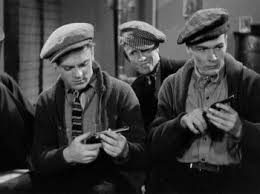
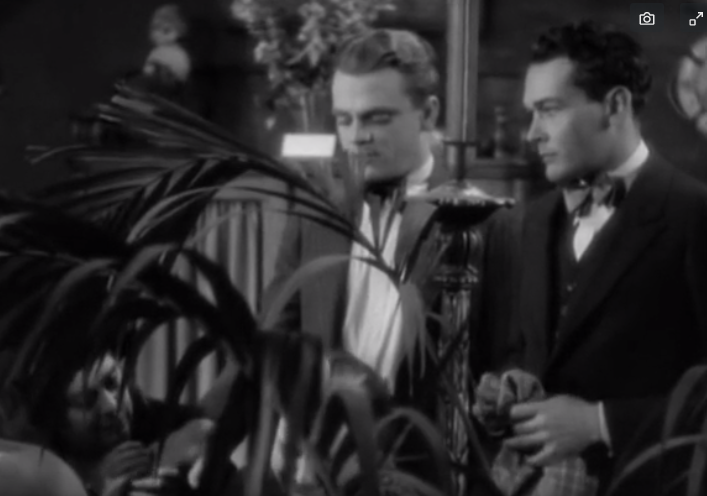
Tom and Matt handle a gun for the first time

I don't mind saying that the first time I saw "The Public Enemy," it scared the bejesus out of me. From the eerily disconcerting "I'm forever blowing bubbles" played on a gramophone to that final murder, it still gives me the chills to this day. That dull thud of a lifeless body before the fade out is right up there with all of those movies that deliberately try to scare you (thinking "The Exorcist" and "The Omen" and the like).
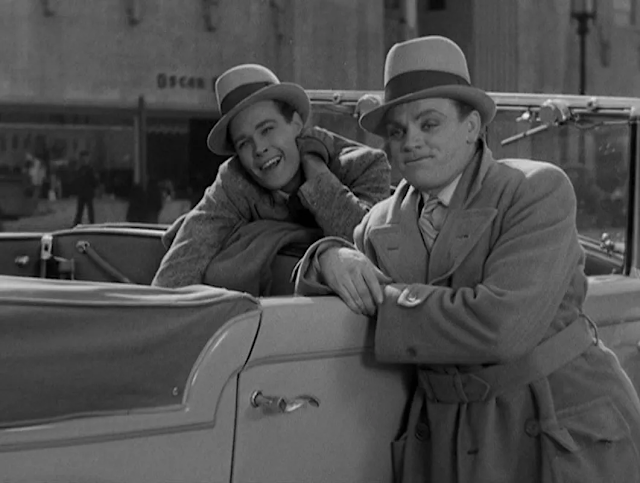
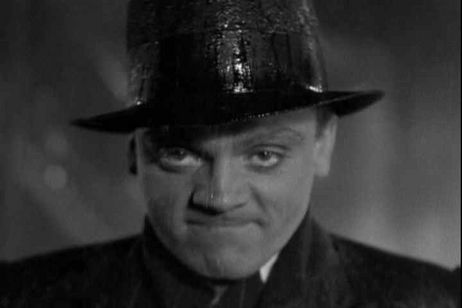
Oozing murderous charm

And yet there is also something compelling about this film that makes it so complicated, something that jazzes the whole nasty story up, and that disconcerting something is James Cagney as Tom Powers. Cagney was originally and famously cast as second banana Matt, but director William Wellman demoted Edward Woods, the original Tom, to the role of Matt and re-cast Cagney as Tom. It proved to be a brilliant move. His on the make charm, that jaunty little spin he takes when he see he has a chance with Jean Harlow's Gwen, his self confident strut when he shows up in his new clothes, all make for an unsettling confusion. If this guy is so bad, why can't I dislike him? 

As Tom and boyhood buddy Matt Doyle drift from a brutal and impoverished childhood into a life of petty crime (they never rise above being trusted lieutenants to boss Paddy Ryan), the first murder they witness is that of their boyhood friend, Larry Dalton. Tom and Matt and Larry, all barely men, are enlisted by gangster Putty Nose to rob a fur warehouse. Things go wrong and Larry is shot and killed by a cop, who Tom shoots before escaping with Matt. Frightened, they go to Putty Nose for help (he has promised to protect them), but they are turned away and forced to fend for themselves. As the neighborhood mothers weep over the loss of a young man who went wrong, Tom and Matt get their first glimpse of a dead body at Larry's funeral. But it won't be their last.
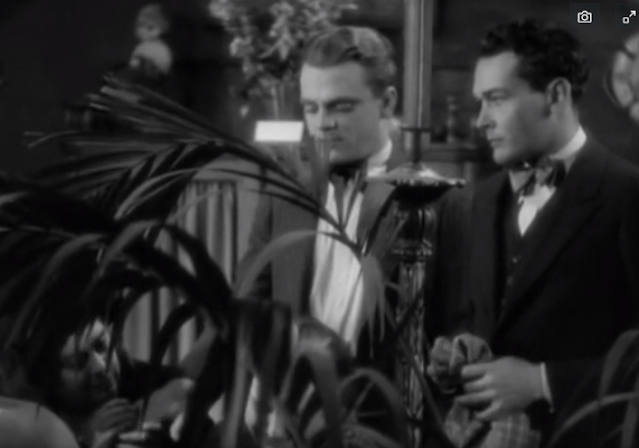
After you see your first friend in a coffin, it gets easier

As Prohibition becomes the law of the land, Chicago crime boss Paddy Ryan recruits Tom and Matt as his "beer salesmen." Strong-arming saloon keepers for their bootleg beer, Tommy and Matt muscle their way through their life of crime. 
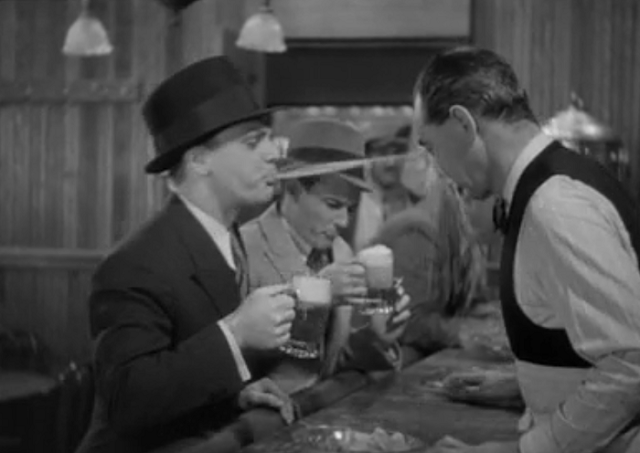
Tom makes clear his distaste for a rival supplier's product 

For a while, they are riding high. New clothes and new women make life even sweeter. Tom is a charming brute. He picks up the unfortunate Kitty, but eventually tires of her, giving her the famous "citrus massage" in her puss. 
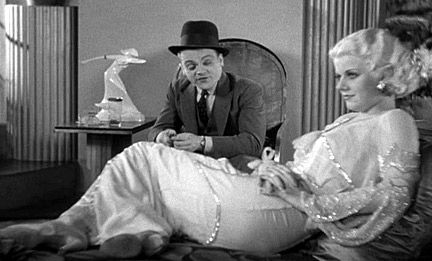
Harlow as Gwen: her acting is green, but her allure is platinum

Mae Clarke as Kitty receives the cinema's most famous facial

He moves up to the more glamorous tart Gwen. Jean Harlow, in an early performance, is pretty terrible. But, as bad as she is, there is an undeniable allure about her and she sure wiggles her caboose in an unforgettable manner. Tom is also is taken under the wing of fancy gangster, Nails Nathan. Nathan is a sort of mentor to Tom, a "class" guy that Tom look up to aspires to emulate.

And then there is Putty Nose. Ah Putty Nose, the dirty double crossing rat who left Tom and Matt holding the bag after the bungled fur warehouse job. Tom does not forget and poor old Putty Nose - well, he had it coming. Can't say I felt bad. He was the groomer who lured Matt and Tom into a life of crime. After doing away with the craven Putty Nose who begs for his life, Tom coolly turns towards the door and wonders if he can still get together with Gwen. A psychopath does have his needs.
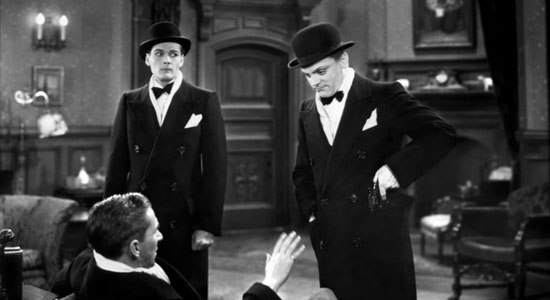
Say your prayers, Putty Nose

So, the thing about Tom that softens me to him, beside his obvious charm, is his admittedly twisted code of honor. In a world where people are double-crossing and selling out one another so fast it makes your head spin, Tom's loyalty to his friends is kind of admirable. I told you this was complicated.
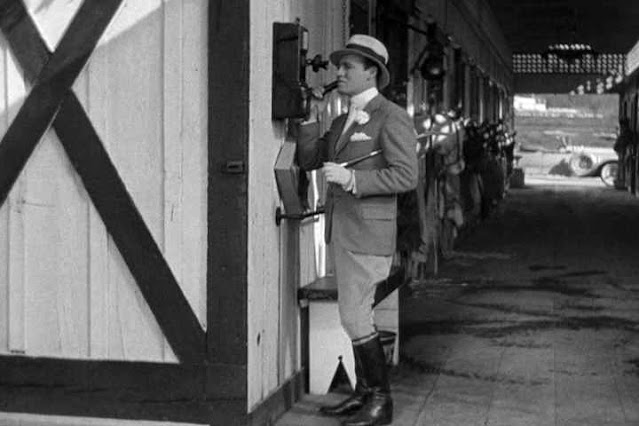
Nails Nathan before his fateful ride

Matt's murder in a shoot out with the rival Schemer Burns gang (live by the gun, die by the gun, I suppose), sends Tom on a vengeful mission. He is outgunned, but somehow manages to survive. Well, that wasn't his enemies' plan and, wrapped like a junior king tut, his lifeless body is delivered to his annoying mom and goody two-shoes brother, the final murder in a murderous tale.
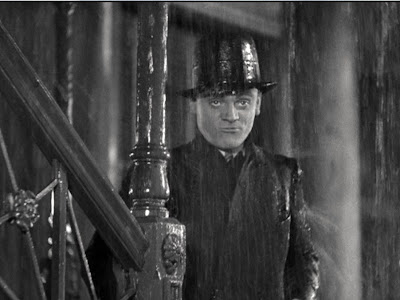
Vengeance is Tom's

Tom Powers is no better or worse than so many of his contemporaries, but there is one other murder in "The Public Enemy" that I can't accept as remotely justified. Unlucky for Tom, just when he is finally making some headway with the hard to get Gwen, Matt appears and tells him the bad news: Nails Nathan has been killed. And not killed by a rival gang, but by his horse. Dandy-wannabe Nails, decked out in his best English riding habit, was thrown by his mount and died as a result of a hoof to the head. Tom, true to his code, has to kill the killer of the man he so admired and, with a single shot, committs equinecide (I know, not a word, but it could be). Honestly, if the guy was a better rider he probably would not have been thrown*. Mercifully, the murder takes place off screen. There is a shot and a sad neigh.
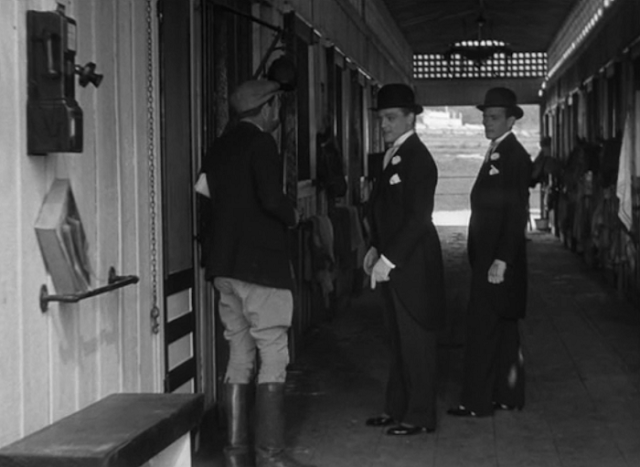
Where's that horse?

And so, I find myself sadder and madder over the murder of an unknown and unseen horse than over the murders of Larry, a cop, Putty Nose, Matt and, ultimately Tom. In a way (other than the cop, who faced potential harm in 1920s Chicago), they all had it coming. But not the horse. If you're the person who cries harder when the dog dies in the film than when the human does, you know what I'm talking about. And when Tom Powers takes that final flop at the feet of his mother and brother, I am pretty sure, to paraphrase Zuzu in "It's a Wonderful Life," every time a horse-murdering gangster buys the farm there is a happy neigh in heaven.
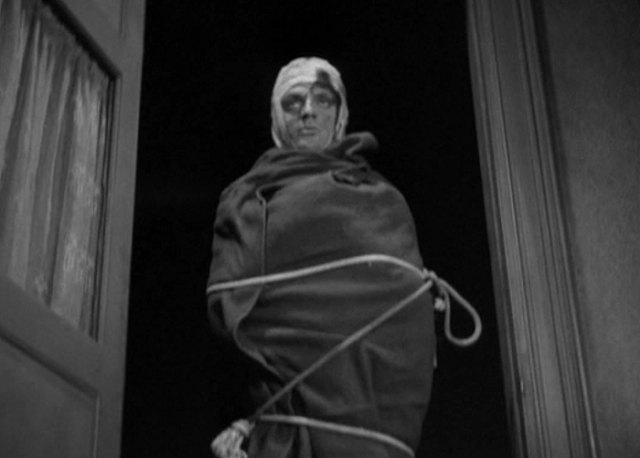
Special delivery

* The murder of the horse is actually based on a true story (as is much of this film). True life gangster Samuel "Nails" Morton was a flashy mobster who took a liking to riding his mount in Chicago's Lincoln Park. When his horse (obviously one on the side of law and order) threw Morton and then fatally kicked him in the head, Morton's compatriot Louis "Two-Gun" Alterie, took the horse out for a ride, shot him and left him for dead. 


Tuesday, May 17, 2022

Fun in the Sun: A Trip to Trouville

This is my entry in the Classic Movie Blog Association's Fun in the Sun Blogathon. For more sun-kissed movie moments, click here and feel the warmth.


Isn't it great when everyone on a little trip has a good time? For all five participants,  the seaside jaunt to Trouville in "Gigi" proves to be a memorable and joyful experience. That's quite an accomplishment, because someone in "Gigi" - until the end - is always feeling a bit out of step or sorts with the others (Gaston with Liane, Madame Alvarez with her sister Alicia, Gigi with Alicia, Gigi with Gaston, Gigi with Parisian lovers in general and on and on. Only Honoré seems unperturbed, but even he is annoyed at Gaston's ennui).

Now, imagine the bracing sting of the sea air, the warmth of the sun on your face and the glow of love in all its seasons and enjoy this little trip to the charming town beloved by Flaubert, Proust, Monet and, oh yes, our 5 main characters.

1. Gigi


After winning a card game with Gaston (at which she flagrantly cheats), Gigi persuades him to take her and her grandmother, Madame Alvarez, to the seaside resort town of Trouville. She has never been to the sea shore before and her excitement leads to toasting the upcoming holiday with a glass of champagne. 

Once there she and Gaston swim, ride donkeys and play tennis. Unlike the other staid and elegant ladies at the resort, Gigi delight and excitement is authentic and infectious. Their obvious joy in one another's company is on full display.   


2. Gaston


For a man so bored with the shallow and jaded life of Belle Époque Paris, the weekend in Trouvillle with Gigi is just what the doctor ordered. Gigi's uninhibited display of happiness is an unfamiliar feeling for Gaston, but one he finds he can not live without. Love is blossoming, as sometimes happens when young people frolic in the sand and the surf.


3 & 4. Madame Alvarez and Honoré


Gigi's grandmother will pay for her scandalous decision to allow Gigi to be seen with Gaston at Trouville, but in the moment she is filled with joy at the sight of the two young lovers having some innocent fun by the sea. She also encounters an old love from the past and, with a wry and gentle spirit, takes a wistful walk down memory lane with someone who was obviously a great love. Time truly does heal all wounds. Seen in the sunset of life, only the fond feelings remain.


For Honoré, this weekend does not turn out quite as planned. The old hound dog pursues a young and obviously boring beauty, but is, as he says, sidetracked by an old wound. He and Madame Alvarez share a charming literal and musical sunset reminiscence of their love. Seen from afar, what once caused pain now brings pleasure. If memory is a virtue, forgetfulness can be a blessing.

#5

And who is that 5th visitor at Trouville? Of course it is us, the audience. How lucky we are that we get to accompany these marvelous characters on their little adventure and to experience love in all its seasons under the hot sun of youth and the elegant and mature glow of a rapturous sunset.