Showing posts with label What a Character!. Show all posts

Saturday, December 4, 2021

George Tobias: Hey! That's Abner Kravitz!

This is my entry in the What a Character Blogathon hosted by Once Upon a Screen, Outspoken and Freckled, and Paula's Cinema Club. Click here for more about our favorite folks who don't need star billing to shine.
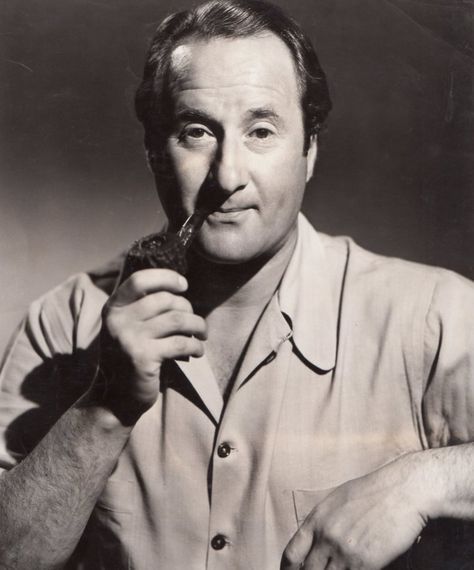
George Tobias as himself

For me, the best character actors are the ones who press that automatic happiness button that's wired in our movie-loving brains. As soon as they appear, you recognize them and the world - movie-wise, that is - is a better place. Like a cuddle under a warm blanket or the platonic hug from an old and dear friend, certain actors who operate below the star billing can provide us with a sense of reassurance. Once they appear, we know everything is going to be fine. And even if it isn't, well, we thought it might.

My introduction to the stars of classic films came through television. Older stars who worked in TV were identified by my mother (See Alice Faye on "The Hollywood Palace"? She used to be a great big star). When it came to movies,  I was a Warner Brothers gal from the get-go, chiefly because those were the only films my local TV station seemed to show. Plus, they really did have the best roster of supporting players, didn't they? So, it was only natural for me to recognize that guy playing an immigrant from some foreign land as good old Abner Kravitz from "Bewitched."

Warner Brothers cornered the market on New York types (my favorite type, by the way), and George was no exception. Having spent most the the 1920s and early 1930s on the stage, he committed to Hollywood in 1939 and somehow became everybody's favorite immigrant. Some of the roles played by this nice Jewish boy were an uncredited Soviet in "Ninotchka," Sascha in "Music in My Heart," Pasha in "Affectionately Yours," Igor Propotkin in "Out of the Fog," Nick Popoli in "My Wild Irish Rose," and Vassili Markovitch in "Silk Stockings." Two of my favorite George Tobias immigrants are Rosario La Mata in 1940's "Torrid Zone" and Nicholas Pappalas in 1941's "Strawberry Blonde." In both films he supported James Cagney, and they seemed to go together like peanut butter and jelly.
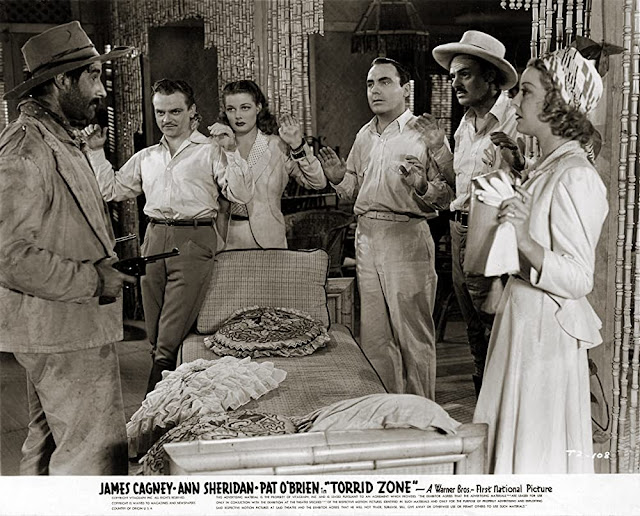

A revolutionary George Tobias

Somehow, somebody thought George would make a good Central American revolutionary in "Torrid Zone." Despite the questionable believability factor here, George plays his role with such ingratiating good humor and gusto that you just have to root for him to escape justice and live to fight another day.
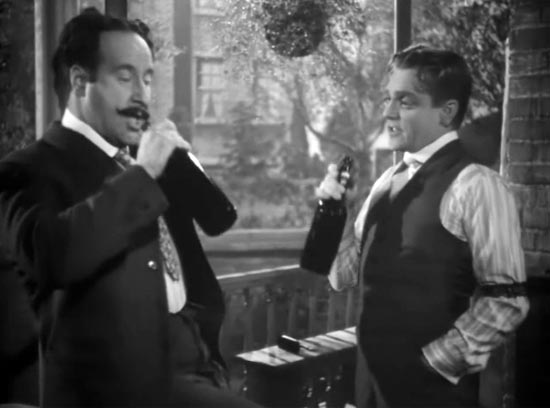

Nick and Biff reminisce about the good old days in "Strawberry Blonde"

The other part I adore him in is as Nick the Greek barber in "Strawberry Blonde." As the usual best friend he gets some very funny lines, my favorite being "boy how those foreigners murder the English language" in his heavy Greek accent while observing a German band singer. Noting that the beautiful strawberry blonde of the title (Rita Hayworth) would not have turned into a nagging shrew if he had married her, he states that "a woman who has 17 children got no time to nag." 

In 1943, George got to show another side of himself in "Thank Your Lucky Stars," a Warner Brothers showcase of performers who donated their salaries to the Hollywood Canteen. Supported by Olivia de Havilland and Ida Lupino as jitterbuggers, George donned a zoot suit and, as always, gave it his all. For once he got support from "A" list leading ladies.


When not playing a fellow from some foreign land, George also turned up everywhere and anywhere as the good friend of the hero. Never a double-crosser, he was reliable and sympathetic, and when he sometimes met his demise as the script demanded, you can't help but miss him (thinking "Captains of the Clouds" here).
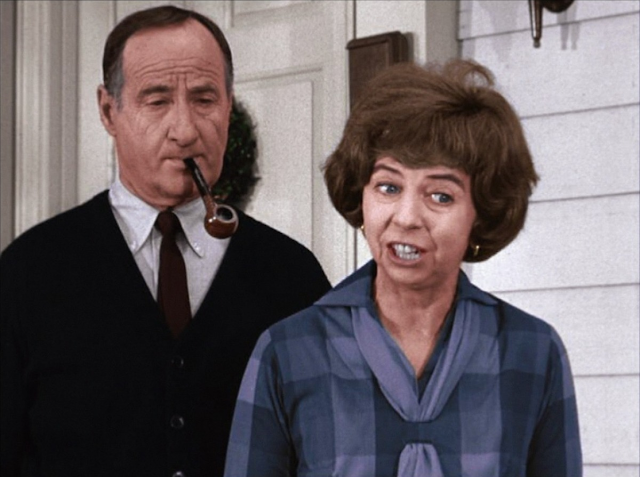

Abner and Gladys Kravitz


And then there was Mr. Kravitz. George did lots of television and when he landed on "Bewitched," well, what can I say? He was the fellow I was always happy to see - just like in the movies.


Monday, November 17, 2014

WHAT A CHARACTER! ANN DVORAK and the road less traveled

This is my entry in the What A Character Blogathon hosted by Paula at Paula's Cinema Club, Kellee at Outspoken and Freckled and Aurora at Once Upon a Screen. Check out their sites for more fabulous film characters.  

I admit to being an Ann Dvorak freak and have written about her often. However, most of my gushings have been over her as the almost A-list star and rarely about her later shift into secondary and character roles.
Ann was a limber veteran of the chorus

Ann Dvorak did it all. The daughter of silent film actress Anna Lehr, Ann did a short stint as a child actress and then, as a teenager, because a member of the chorus in early MGM musicals (she is all over the chorus in 1929's "The Hollywood Review"). She exploded on the screen as Cesca in 1932's "Scarface," and made a dramatic impression in such films as "Three on a Match," "The Strange Love of Molly Louvain," and "Housewife." It was a testament to Warner Brothers' faith in Ann that she was top billed over Bette Davis in both "Three on a Match" and "Housewife" (later re-issues featured Bette, but originally Ann was billed first). 
As Cesca in "Scarface"


Coked up and ready to jump out of the window
to save her son in "Three on a Match"

In 1932-1934, Ann seemed to be on her way to super-stardom, but she lacked something that Bette Davis had in abundance: a single-minded dedication to her career. She placed her marriage to actor/director Leslie Fenton  before her career and simultaneously took on Warner Brothers in a lengthy, and ultimately futile, pay dispute. After that Ann free-lanced, but never again got a shot at a starring role in a top flight film. She veered between leading roles in poor films and supporting roles in good films. But, whatever Ann did, she always improved the quality of the film just by being there. She was quirky, individualistic and not at all like anyone else.

Three of Ann's most notable character roles were in these films:

Out of the Blue (1947)
No star billing for Ann, but she stole the show
George Brent and Virginia Mayo were the stars and Carole Landis was getting the star treatment, but Ann, as the perpetually drunk Olive steals the show. In a rare chance to show some comedy flair, Ann is the only reason to see this fluffy, kinda-like weekend at Bernie's affair.
Ann spent a great deal of her time passed out in "Out of the Blue"

Our Very Own (1950)

As the unwed birth mother who gave up Ann Blyth, Ann gives perhaps her strongest supporting performance. In a part that could easily have become a cliche, she gives the part of Gert great depth and complexity. She is a poor soul, a miserable housewife trapped in miserable marriage and resigned to her fate. She doesn't want her husband to know she had a child out of wedlock, but she agrees to meet her birth daughter nonetheless. It is a small part, but showy and Ann Dvorak showed audiences what they had been missing.
Ann Byth was sure glad to get home to her adoptive
family after meeting Gert

A Life of Her Own (1950)

Ann only had 10 minutes of screen time in this film, but she is unforgettable as the aging model whose decline and demise proves a cautionary tale to Lana Turner. As Mary Ashlon, Ann wipes the floor with poor little Lana. As her career fades, a bitter Mary turn to drink and finally commits suicide by taking a swan dive out of a high rise window (just as she did when Ann Dvorak's career was on fire in "Three on a Match." Turner Classic Movies named Ann's performance as Mary Ashlon one of its 10 great overlooked performances.

Ann as the chic, doomed Mary Ashlon
Ann Dvorak was always more than her career. She was a passionate wife (3 times), an ambulance driver in WW II London, and a woman of many non-theatrical interests. Unfortunately,her acting talent was her bread and butter and, in that, she faltered. While she always played a prominent part in all of her films, she never again found that comeback hit. Her last film was a supporting role in the Humphrey Bogart/Gene Tierney film "The Secret of Convict Lake." She made a few TV appearances after that and then quietly chucked it all for a retirement in Hawaii, where she died in 1979.