Monday, July 2, 2012

The Spark That Lit The Flame

I've been doing some amateur time-line therapy on my movie obsessions lately, trying to work backwards to find the sparks that lit the flames that grew from interest to obsession (in a good way, of course). It could have been a photo, a TV show or even a movie that started me on one of my many journeys and, as with the best journeys in life, they often lead to a most unexpected destination.

Since movie magazines and TV were my first introduction to classic films and stars, the spark usually started there. It is great to be able to look things up on the internet, but, boy, was it fun to go exploring at the public  library, hoping to discover some unknown information about a new interest. And, oh the excitement, when you did!

These flames are eternal.
 The Sparks


Spark: "The Public Enemy"
Just an afternoon movie that came on immediately after the usual Saturday afternoon Bowery Boys installment. Maybe I was too lazy to get off of the couch and change the channel (no remotes at our house), maybe something in the preview intrigued me, but whatever it was, I stayed glued to the TV throughout the entire film.


Spark: Unknown Chaplin
This 3-part Kevin Brownlow and David Gill series, shown on PBS, was a revelation (having seen it before the "Hollywood" series). Like most of the world, I knew who Charlie Chaplin was and had seen many bad copies of his early films. I wasn't impressed. This series changed everything.


Spark: The 16-part "Hollywood" series, also by Kevin Brownlow and David Gil. I had actually picked up the companion book "The Parade's Gone By" earlier, but it did not have the same impact as the series. This treasure trove of information and interviews literally changed my life. Kevin Brownlow is one of my heroes.


Spark: This photo of Jean Harlow
I saw this photo in a large picture book called "The Stars" by Richard Schickel. Other photos fascinated, but there was something about this blonde lady on a horse checking her make-up. My Aunt Lois said "oh, that's Jean. She never wore underwear."

 
Spark: 1940's "City For Conquest."
Any Cagney movie was always a must, but this one had an added surprise.

 
Spark: "Three on a Match"
Having developed a slavish devotion to all things Warner Brothers, this little film with favorites Bette Davis and Joan Blondell seemed a natural.


Spark: David Shipman's "The Great Movie Stars: The Golden Era."
This epic volume had a profound impression on me and I still refer to it to this day. It's a welcome companion on a blue day.


Spark: David Robinson's 1985 book "Chaplin: His Life and Art"
I have re-read this amazing bio many, many times. While there may have been others that are more factually accurate, this paints an unforgettable portrait and offers wonderful information about those early Hollywood years.


Spark: "Vertigo"
It's easy to become obsessed about a film about obsession. No matter how many times I watch it I still have so many unanswered questions.


Spark: "Sunset Boulevard"
Probably my favorite movie of all time. It combines my love of the silent era as well as more modern films.


Spark: Richard Schickel's bio "D.W. Griffith: An American Life."
A must for anyone who cares about the origins of American movie-making. I earned a great respect for Griffith and his work. A fascinating story.


Spark: "Charade"
The music, Paris, continental romance and beautiful clothes, a chance viewing lead from love to obsession.


The Flames


Flame: James Cagney
After viewing "The Public Enemy" on that chance Saturday afternoon, my love of old movies was born and I had only 2 burning questions for my mom: who was James Cagney and where can I find out more about him? Such charm, such charisma. I tell you, I was a gonner!
Others have come and gone, and many have stayed for along time, but Jimmy will always be foremost in my heart. He was the first classic movie star I loved and how lucky for me that my first love is eternal.


Flame: Charlie Chaplin
Once I fell under the enchanted spell of the Little Tramp, it was only a short while before his genius revealed itself to me. 
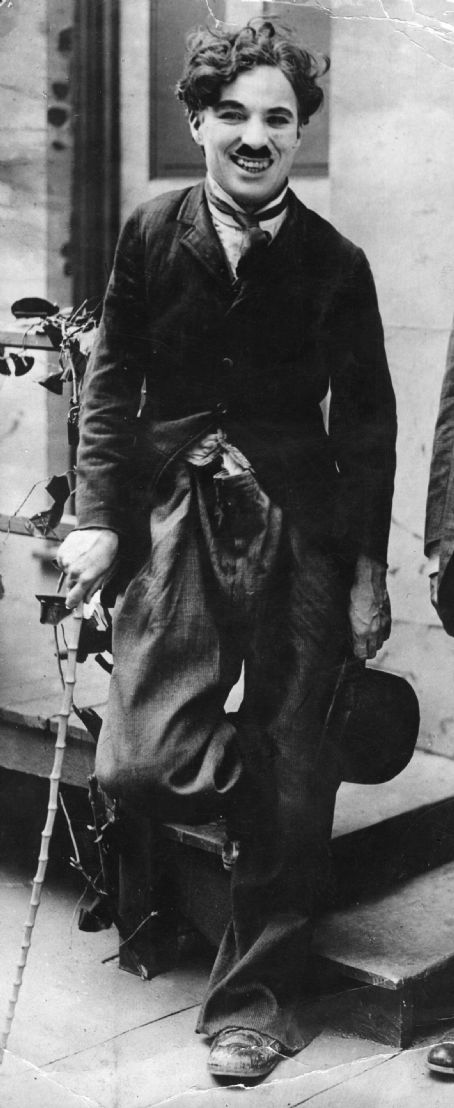
Aside from a comic, he is an artist whose humanity is as big as the world. Others may be funnier, but none  shine a light into the secret recesses of the human heart better than Charlie.

Flame: From the "Hollywood" series: Silent Film, Buster Keaton, Clara Bow, William S. Hart and Rudolph Valentino.
Thank you Kevin Brownlow and David Gil for opening the door to a lifelong passion.

Flame: 1930s Glamour Photography. Seeing Jean Harlow in all of her platinum glory taught me the definition of glamour. 
Drooling over black and white works of art from the great portrait photographers is an obsession I never tire of. 

Flame: Ann Sheridan
Ann Sheridan in "City for Conquest" was, to me, the most beautiful, down-to-earth woman I had ever seen! 
Her chemistry with Cagney is unsurpassed. No matter what the film, Ann is always a pleasure to watch.


Flame: Ann Dvorak
Ann's performance in "Three on a Match" was a revelation to me.
She was beautiful, jittery, and doomed - a perfect pre-code woman! Plus, she looked great in lingerie. Her too-early exit from starring roles is unfortunate.


Flame: Kay Francis
David Shipman described her as "wavishing Kay Fwancis," one of the best-dressed women in Hollywood.
That was enough for me. Who the hell was Kay Francis? Why haven't I ever seen her and how can I see more of her?  Before TCM, it was a challenge, but after seeing "Trouble in Paradise," I am coo-coo for Kay-Kay.


Flame: Edna Purviance
I can't say why, but Edna Purviance fascinates me. Perhaps it because she remains a bit of a mystery in a world where everything is known about everyone. 
Her story seemed to be written in the margins of Chaplin's life and film. As the years have gone by, I have learned much about Edna, but there remains so much more learn. This is one journey I want to savor.

Flame: Alfred Hitchcock
It's a close race with Billy Wilder, but I think Hitch wins the race for favorite director. 
Endlessly watchable, endlessly debatable, always beautiful and fascinating. How many dreams started with a Hitchcock film?


Flame: Gloria Swanson, Pola Negri, Norma Talmadge, Alla Nazimova, Theda Bara
and all of the silent great ladies whose names were forgotten.
They did, indeed, have faces then. But, besides faces, they had a way to reach into your heart and cast a spell. They were the very definition of "Movie Star."


Flame: Mary Pickford and Miriam Cooper
Both ladies worked for Griffith. One went on to become to be the world's biggest star. The other faded into obscurity. 
Mary's life is well known and it is an endless pleasure to me to discover her art. Miriam's work is harder to find and she is probably not a great actress, but there is something about classy, loony Miriam...


Flame: Audrey Hepburn and Cary Grant. Too hot to go near.
Before "Charade," I loved them both. After "Charade," it was total obsession. 


In those sophisticated, elegant early 1960s, he was the perfect man and she was the perfect woman. To me, that will never change.


Some long-burning embers that may erupt at any moment:


"The Man Who Would Be King" - Michael Caine
"The Apartment" - Jack Lemmon, Billy Wilder
"How To Steal a Million"  - Peter O'Toole
"Sherlock Holmes" - Robert Downey, Jr.
and Veronica Lake, William Holden, Robert Mitchum, Hayley Mills, and on and on!


What were your sparks that lit the fire that caused the flame of a movie obsession?


Tuesday, June 26, 2012

How To Steal a Million: Wyler in Twilight

This is my contribution to the William Wyler Blogathon, hosted by The Movie Projector. Please click here to read the other wonderful posts covering Mr. Wyler's long and superb career.
A faded ruin seen in twilight can be a beautiful sight. Time, decay, and benign neglect don't usually show a monument to its best advantage, but if she is structurally sound and inherently lovely "age cannot wither her, nor custom stale her infinite variety" (to quote Will S.). Filmed at a time when Hollywood as the natives knew her was thought to be on life support, William Wyler's "How To Steal a Million" was made while pieces of the great studio system fell around it like a burning building.
The art of the romantic caper in the hands of experts

The old gal hadn't quite stopped breathing in 1966. Studio-backed films such as "The Bible," The Sand Pebbles," and "Hawaii" still pulled in big bucks at the box office, but change was imminent. Cary Grant made his last movie, "Walk Don't Run," that year and hard on Hollywood's heels was a leaner, meaner, grittier international product that was all the buzz. "Alfie," "Who's Afraid of Virginia Woolf?," "Georgy Girl" and "Blow Up"  were the anti-Hollywood "in" films to see. Blast-from-the-past directors like Alfred Hitchcock ("Torn Curtin") and Billy Wilder ("The Fortune Cookie") were still in the game, but films were shifting focus from the star to auteur-directors such as Mike Nichols, Michelangelo Antonioni, and Claude Lelouch. Hitchcock could easily move to center-stage when called upon, but this was not so easy for William Wyler.

The chemistry between the 2 stars is undeniable
Master director William Wyler was the antithesis of the director as star. His work, it seemed, revealed nothing of himself, his psyche, his obsessions, fetishes and passions. And so, in 1966, what was one to make of "How To Steal a Million," a charming and frothy and forgettable romance and crime caper? While hardly a ruin, it features Audrey Hepburn, at age 37, in her last "jeune fille" role. As yet another young lady with a "father dilemma" (Hugh Griffith as an incorrigible art forger), Audrey could never be less than enchanting. Together again after their historic collaboration years before in "Roman Holiday," Hepburn and Wyler have all the right moves. Besides working with a favored director, Audrey also has terrific chemistry with an equally ingratiating Peter O'Toole (proving he could have been just another handsome leading man if he hadn't decided to be a great actor). Together, they are smashing.
Hepburn & Givenchy: there can never be too much
Everything Audrey did and wore in this film
 was ultra glamorous and ultra chic
Dressed for a caper as only Audrey can
Looking very "swinging sixties"


Filmed in and around Paris, Wyler and company create a chic, madcap comedy of crime and love. And never discount the role of "the look" as a major character in any Audrey Hepburn film. Givenchy is ever-present in a series of gorgeous get-ups (except when Audrey has to don the duds of a scrub woman - with glittery eye shadow), sports cars abound and everyone looks just ooh-la-la. Charles Boyer is on hand for authentic Gallic charm, Hugh Griffith and Eli Wallach lend solid comic support and John William's score (scoring always being an asset in a Wyler film) adds to the general overall sense of romantic delight.
Not exactly "Roman Holiday," but their admiration and
respect for one another was obvious

Standing in the sidelines of all the cinematic grandeur and all of the folly that followed, "How To Steal a Million" still stands today as exactly what it was meant to be; a delightful, beautiful, glamorous escape. This was the product that professional Hollywood perfected and was perfectly served up by one of its master craftsmen. Wyler is in complete control of this sweet cinematic bon bon and, as with all sophisticated and slightly expensive sweets,  it is a pleasure for more than one of the senses. Whether they knew it or not, it was a fond farewell to Audrey's "girl" character and to the sumptuous productions that could only be made by a state of mind called Hollywood. But, as they say in the backstretch, breeding tells. Today, this film holds up just as well, if not better, than so many of the "hot" movies that were the critics' darlings that year. When you build with good material and your builder is a master like William Wyler, the ruin stands tall in the twilight while the upstarts crumble like dust at its feet.


Care to join me in a caper? Not quite a classic, but lots of fun!


Friday, June 15, 2012

Bitches and Blaggards: Gloria Grahame and Vincent Price

This is the sixth in the "Bitches and Blaggards" series; monthly posts devoted to my favorite movie bad girls and rogues A bitch is a selfish, malicious woman. A blaggard is a villain, a rogue and a black-hearted man. Both are bad, both are devastatingly alluring.


Gloria Grahame
Gloria Grahame was a gal who embraced her inner floozy. No blushing heroine, she; not even a nice girl forced into unfortunate circumstances. No, little Gloria, the "girl with the Novocaine lip," was a cinematic bad girl and trollop deluxe. Her motives are rarely pure, but somehow you find yourself rooting for this gal. You can gown her, fox-fur her and bejewel her and still she is NOT the girl you want to bring home to mother. Bless her crooked little heart. Two of Gloria's great bitch roles are "Sudden Fear" and "The Big Heat."


Sudden Fear
Gloria was a very bad girl here. Star Joan Crawford plays Myra Hudson (a relative of Blanche, perhaps?), who marries hunky Jack Palace. She marries for love and he marries for money. Once he learns that Myra plans to leave the bulk of her estate to charity, Jack and girlfriend Gloria plot to bump her off before the ink hits the paper. As usual, things go badly for Gloria and she winds up dead. She is flawless here, bad but just a victim of love and a louse.


The Big Heat
This is the one where Gloria's face gets scarred when old flame Lee Marvin throws hot coffee at her. Where was Kramer and Jackie Chiles when she needed them? Gloria is by far the best thing about this movie. While not exactly a bitch (she does have a good heart in the end), she has played so long with the rough boys that she is a pretty tough cookie herself. If you want to wear the mink, you gotta slink the slink.

Off-screen, Gloria was equally scandalous. Married to director Nicholas Ray, she began an affair with her 13-year old step-son, Tony Ray. She and daddy Nick subsequently divorced and after another husband thrown in for good measure, Gloria and Tony (who had 2 children together) finally tied the knot. Well, that didn't last either (surprised?).

And about that Novocaine lip: this was a case of plastic surgery gone bad. Apparently, she stuffed her upper lip with cotton rather than own up to the surgery.

Still, we love Gloria Grahame, the little trollop that could.

Vincent Price
Now, I just love Vincent Price. He was so much more than a blaggard, but he could be a mighty good (bad) one if asked. Before drifting into semi-humorous horror roles, he displayed a discomforting ability to torture the fairer sex. Two of Vincent's best appearances as a blaggard are in "Laura" and "Dragonwyck."


Laura
"Laura" is a special film because it features two blaggards and a bitch (Judith Anderson). Clifton Webb's Waldo Lydecker is the chief villain, but Vincent Price's Shelby Carpenter is no prize, either. He is charming, he is weak, and he is a cheat. As the film unfolds, it is not really clear why Shelby wants to marry Laura, since Ann seems to give him everything he needs and wants. Of course, Laura is beautiful, but the lure of Ann's easy money is too great. Plus Ann looks the other way when he cheats with Diane Redfern (the girl who is actually murdered). He lies to the police, he lies to Laura (though he does try to defend her when he suspects her of the murder) and he cheats like a devil. Laura eventually comes to her senses (with the help of hunky Dana Andrews), but Shelby was a charmer in his smarmy way.

Dragonwyck
In "Dragonwyck," Price again gets to torment beautiful Gene Tierney. As the master of the foreboding estate, Dragonwyck, Price's Nicholas presides over his kingdom like a Rochester wannabe. But, the story demands that lovey Gene find him irresistible. Soon we find out that, besides being a beast that crushes the little people beneath his boot, Nicholas has poisoned his first wife and plan's to do the same to current wife, Gene. Watch out for guys who tend to their oleander plants!


Price also menaced in some neat noirs, notable "The Bribe," before hitting the horror trail. In real life he was a bit of a Renaissance man in a world where such men are a rarity. Besides being an actor of great ability, we was a connoisseur and collector of fine art, a raconteur and a man of great humor. And, a damn good blaggard, I might add.


Coming Soon: The Bitch and Blaggard of July are Jack Palance and Lizbeth Scott


Thursday, June 7, 2012

Silent Screen Body Language

Just as some languages are beautiful to the ear, the language of silent film is beautiful to the eye.

Silent film is especially known for the emotions transmitted via the eyes, but the rest of the body was an equally important communication instrument when unspoken cinema was the universal language. A gesture, a glance, a movement, the placement of a hand, all had to be understood by various cultures wherever there was a movie palace. People around the world knew love, hate, joy, passion and fear when they saw it - no Rosetta Stone required.

The Eyes
The eyes are the window to the soul, right? So, any silent film performer worth his or her salt had to have expressive eyes.
Theda Bara's black-smudged eyes were synonymous with smoldering passion.
Gloria Swanson's gaze was intense. Here icy blue eyes were her trademark.

Buster Keaton may have been known as "The Great Stone Face," 
but his eyes spoke volumes.

The Hands
The elegant and delicate placement of the hand was a trademark silent film must.
Mary Miles Minter knew just how to gesture with her digits.
Mary Pickford's hands were an encyclopedia of expressions.
Lillian Gish often let her hands do the talking.
Charlie Chaplin's leading lady, Edna Purviance, 
had extremely expressive hands.
The Body
Some actors and actresses moved with a signature grace and purpose that was closer to dance than acting.
Douglas Fairbanks moved with a grace and athleticism 
that will never be equaled.
Chaplin moved with such grace and precision that 
W.C. Fields called him a ballet dancer.
Valentino's movements projected danger, passion and allure.
Lovely Clara Bow was always in motion. Only sound could slow her down.

They Had Faces
A gallery of fabulous faces:


The one and only Garbo
The great Norma Talmadge
The face of John Gilbert

The timeless beauty of Louise Brooks
The haunting face of Maria Falconetti
In all its variations, the face of Lon Chaney is unforgettable.

Above all, the silent cinema is a celebration of the human face and form. Its language speaks not only to the eyes, but also to the universal heart of mankind.